from Matter Memory to the Aftermath of Agent Orange
2025 – 2026
Prototyping Violence is an artistic research, which investigates how materials and living systems carry the memory of human violence. Functioning as a framework, the project explores how artistic experimentation with chemical and biological processes can reveal and re-mediate the ecologicaltrauma left by Agent Orange and other forms of environmental warfare.
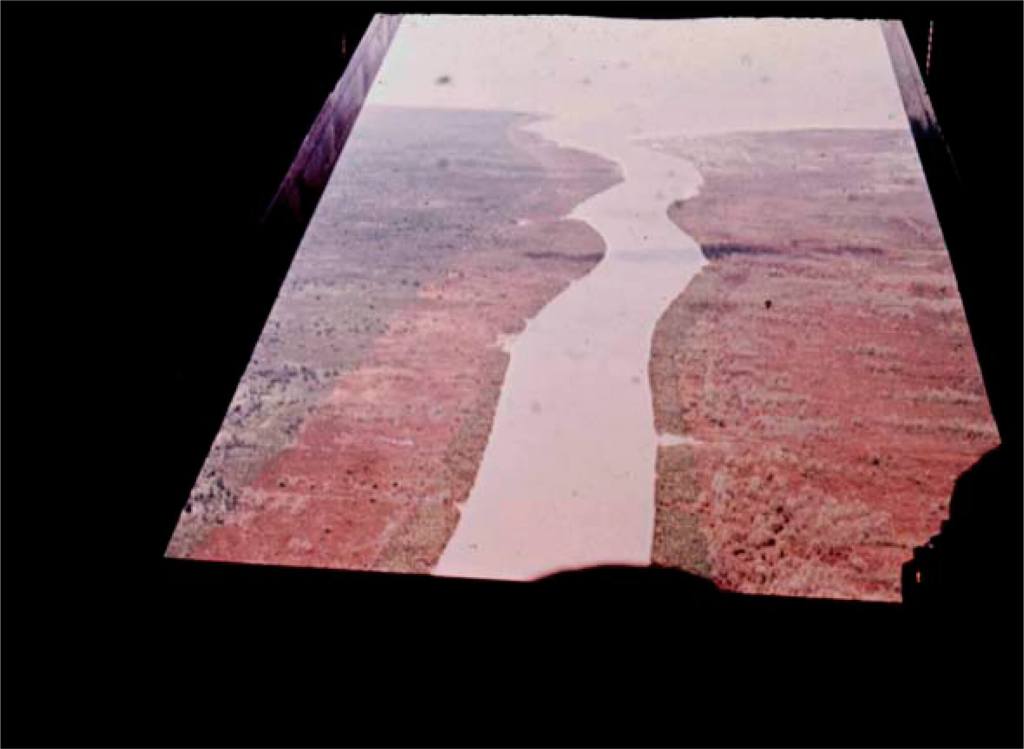
Results of the first defoliation mission of Project Ranch Hand (Agent Orange), January 1962, Ca Mau Peninsula, Vietnam (Photograph courtesy of US Army Chemical Corps, Fort Detrick, Maryland)
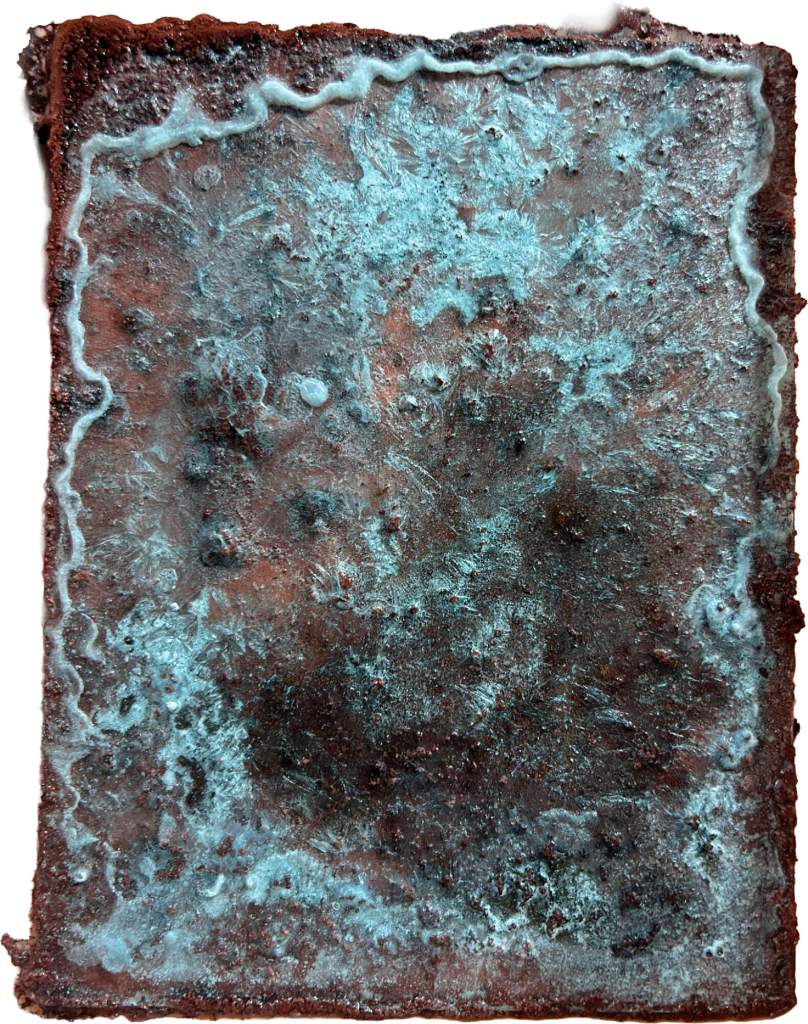
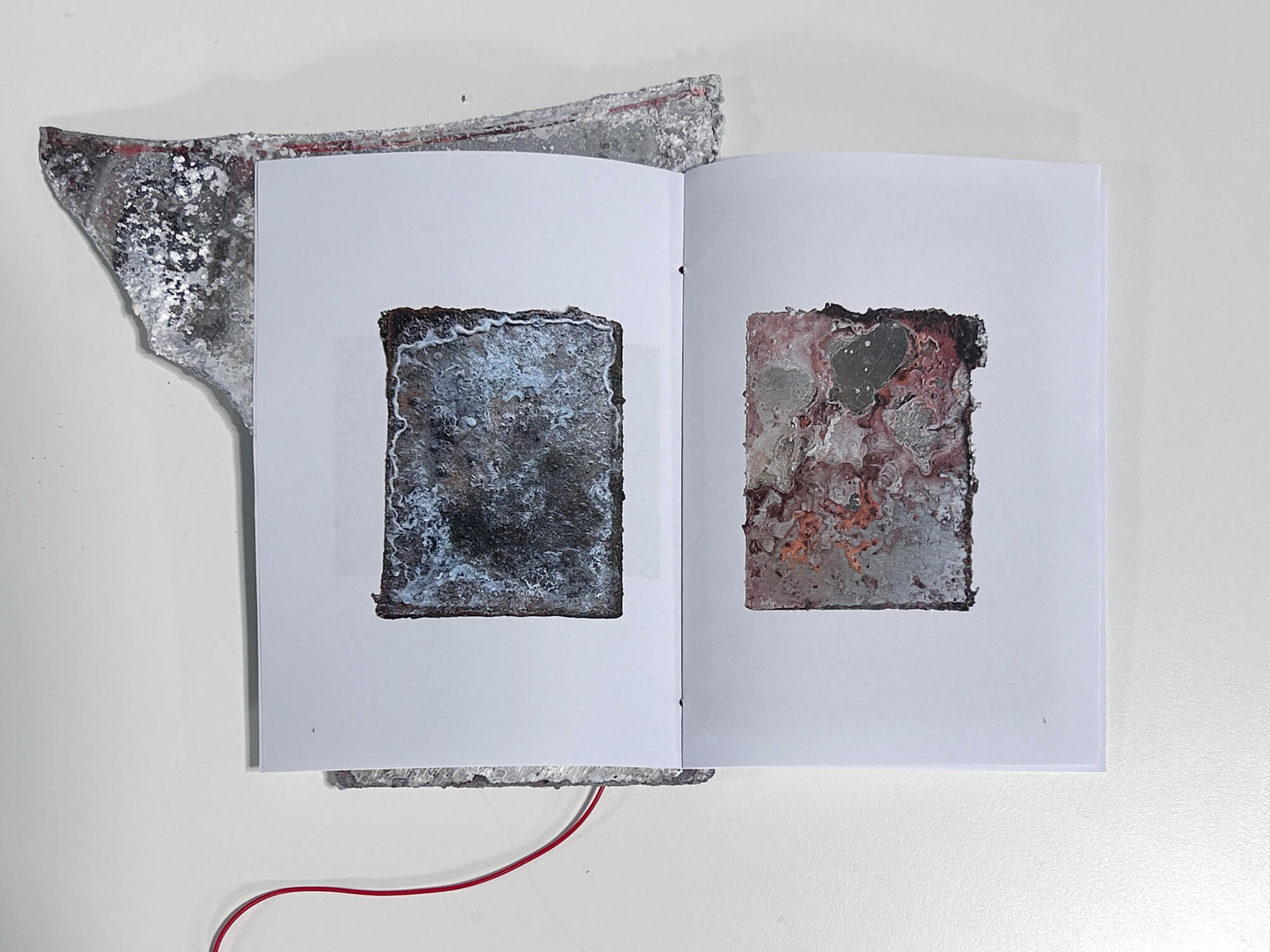
Corrosion Study No. 1. Front side. Copper Sulfate on Aluminium. 2025
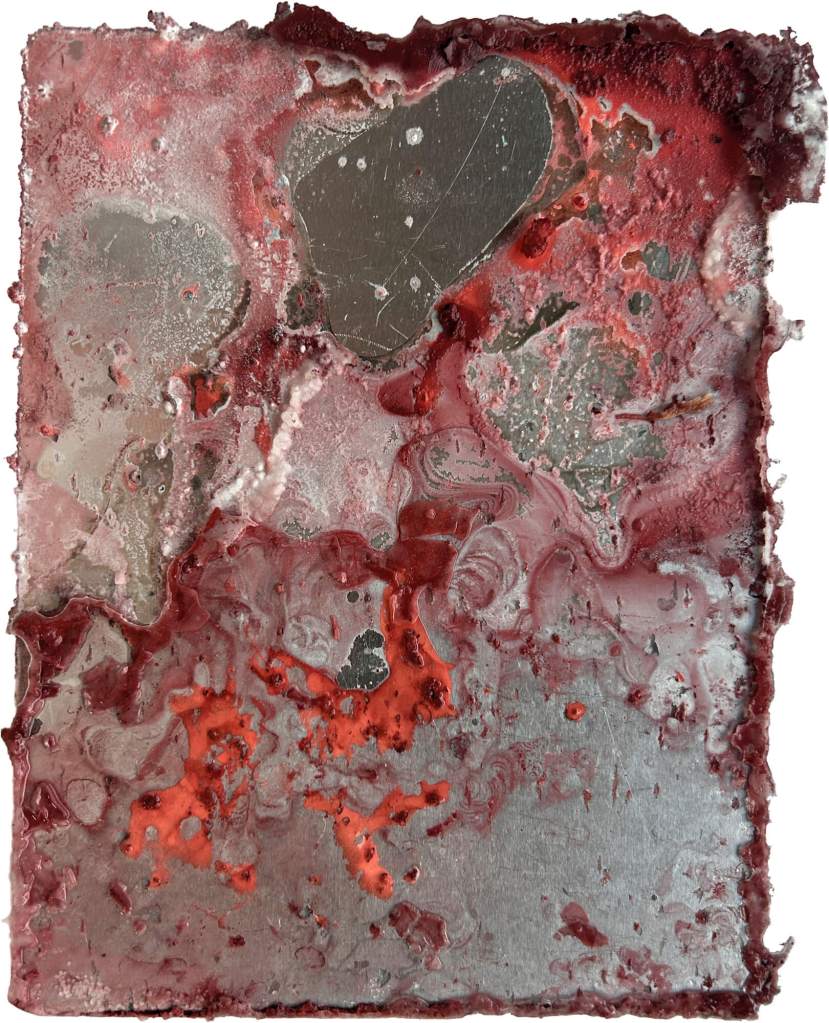
Corrosion Study No. 1. Back side. Copper Sulfate on Aluminium. 2025
Between 1961 and 1970, the U.S. military sprayed herbicides containing TCDD (dioxin) to defoliate forests and agricultural land. While the immediate destruction was visible, many effects continue to accumulate slowly in soil, vegetation, and human bodies.
Building on her earlier projects Scent from Heaven and Garden of Entanglement, Hiền Hoàng works with corrosion, residue, and mycelium growth as acts of material transformation. These processes mirror the over-activation of energy that defines both chemical destruction and psychological trauma. Each corroded surface or fungal growth becomes a form of material witnessing—a record of how matter absorbs and remembers harm.
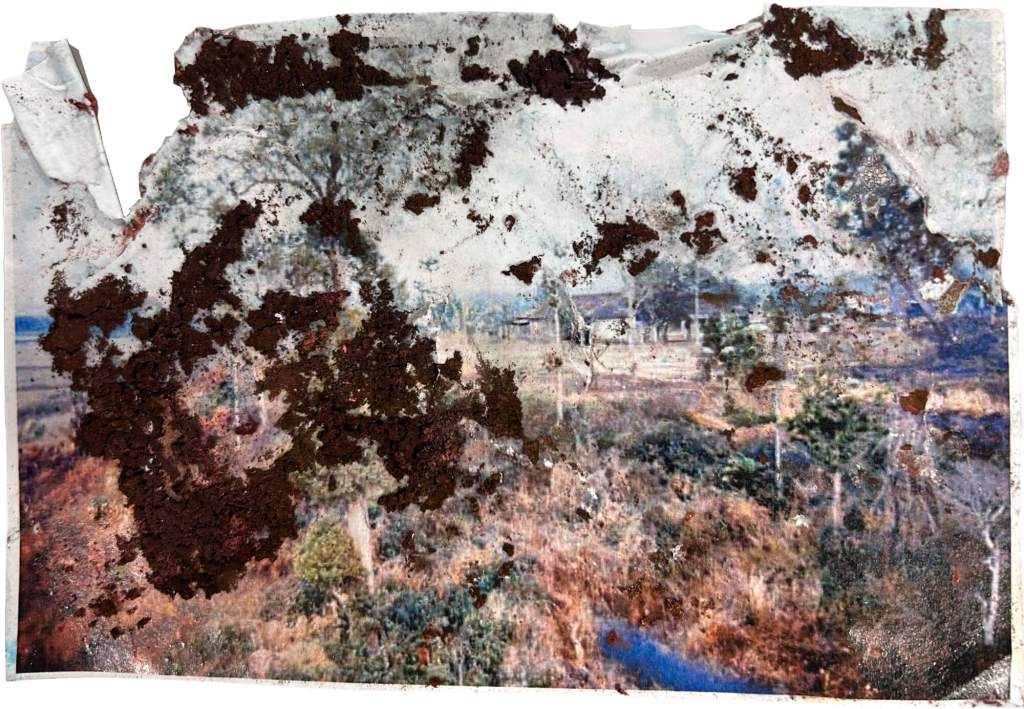
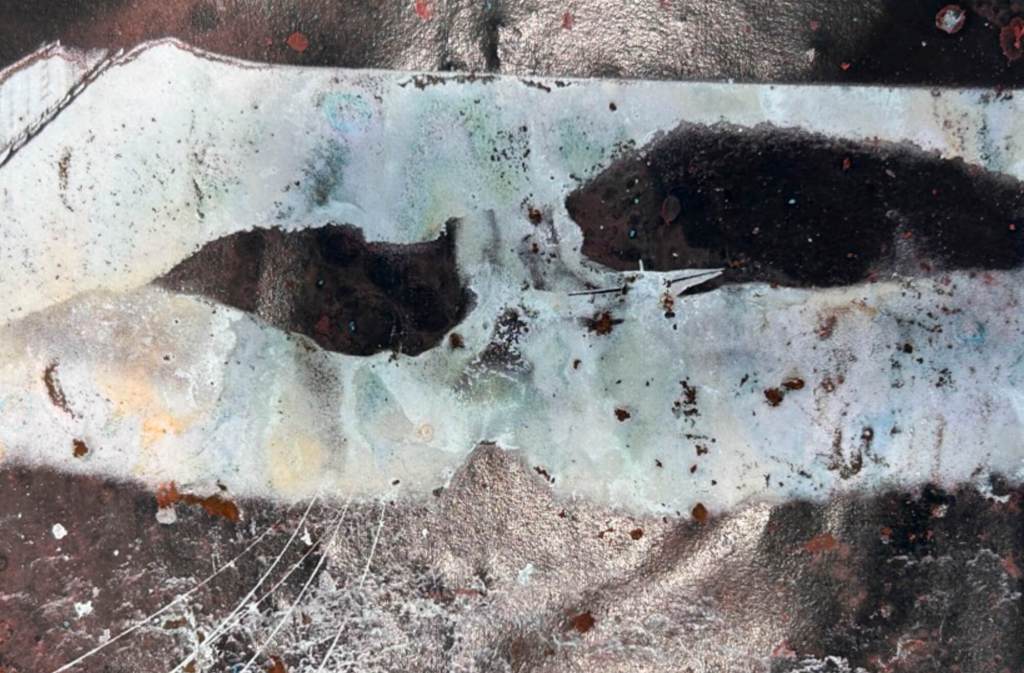
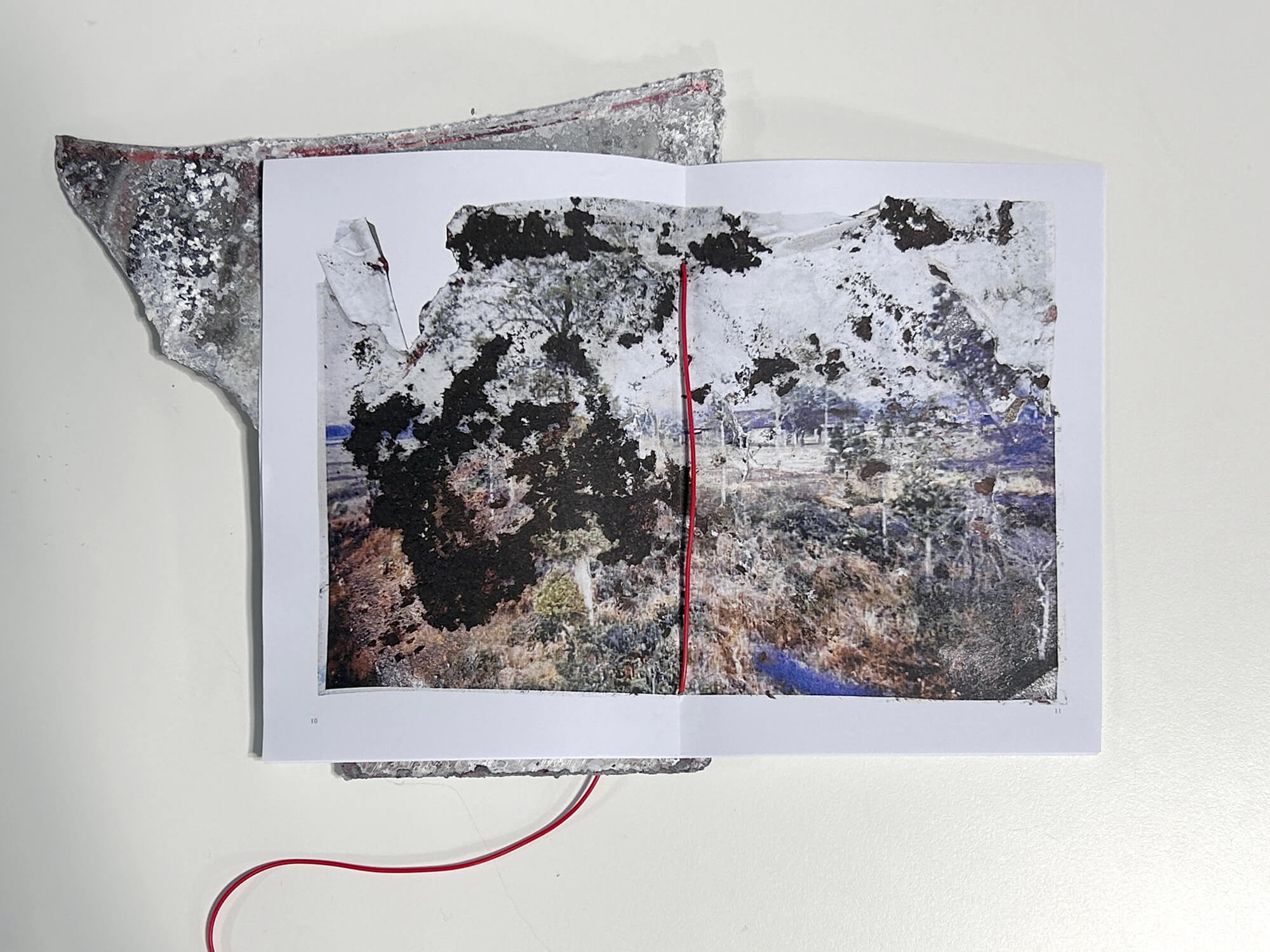
Archival photograph printed on paper, corrosion residue from Aluminum and Copper Sulfate, 2025. Image Source: US Army Flight Operations Specialist 4 John Crivello in 1969.
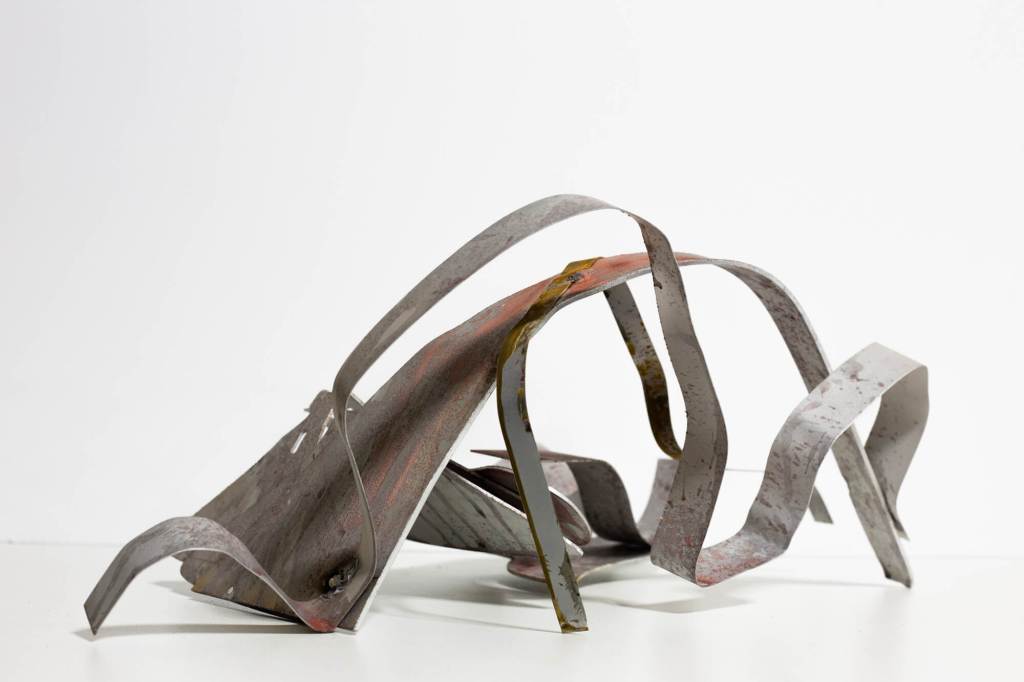
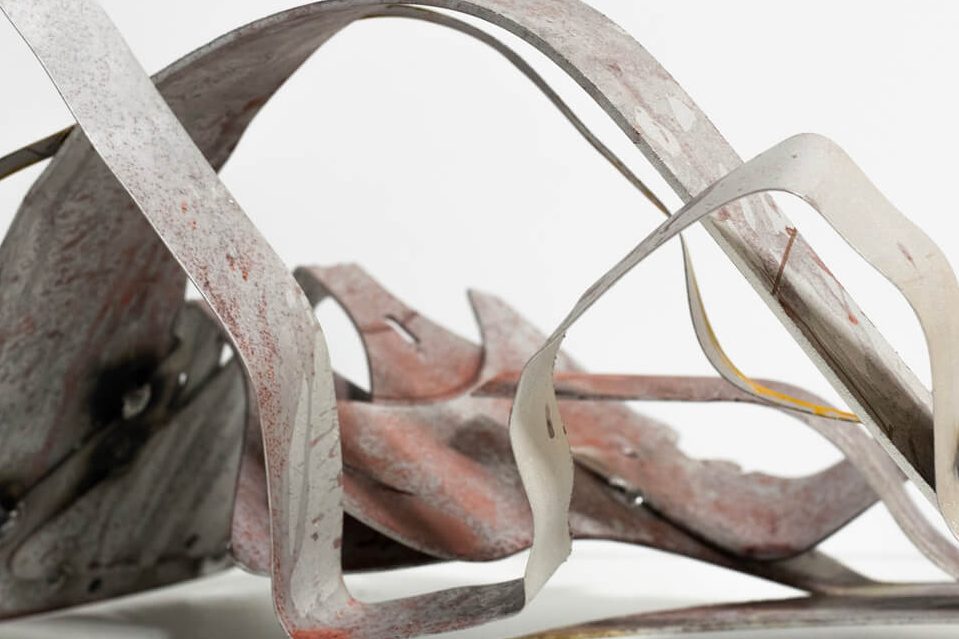
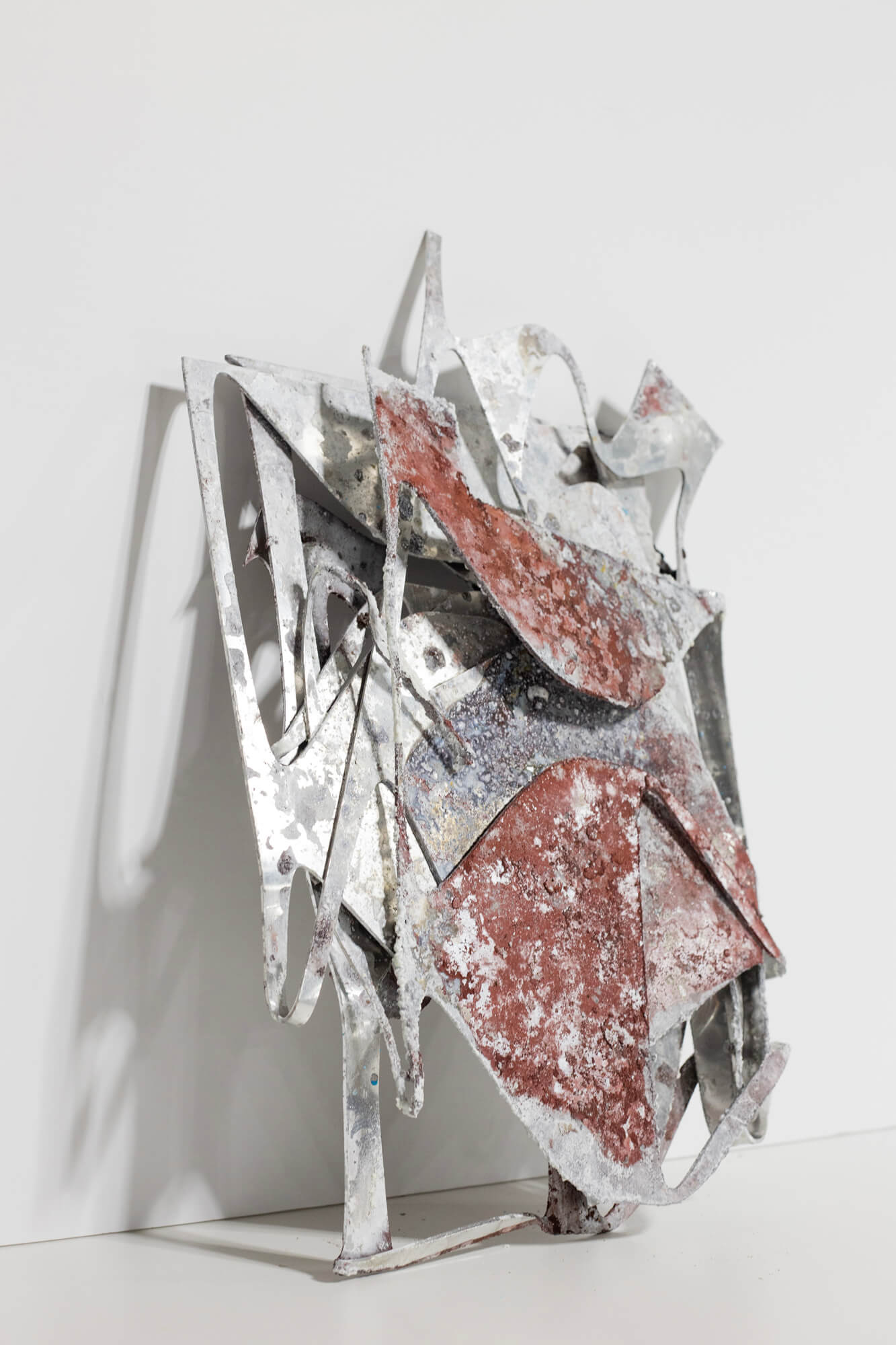
Prototyping Violence. Sculpture Study No. 1. Sculpture view. 2025
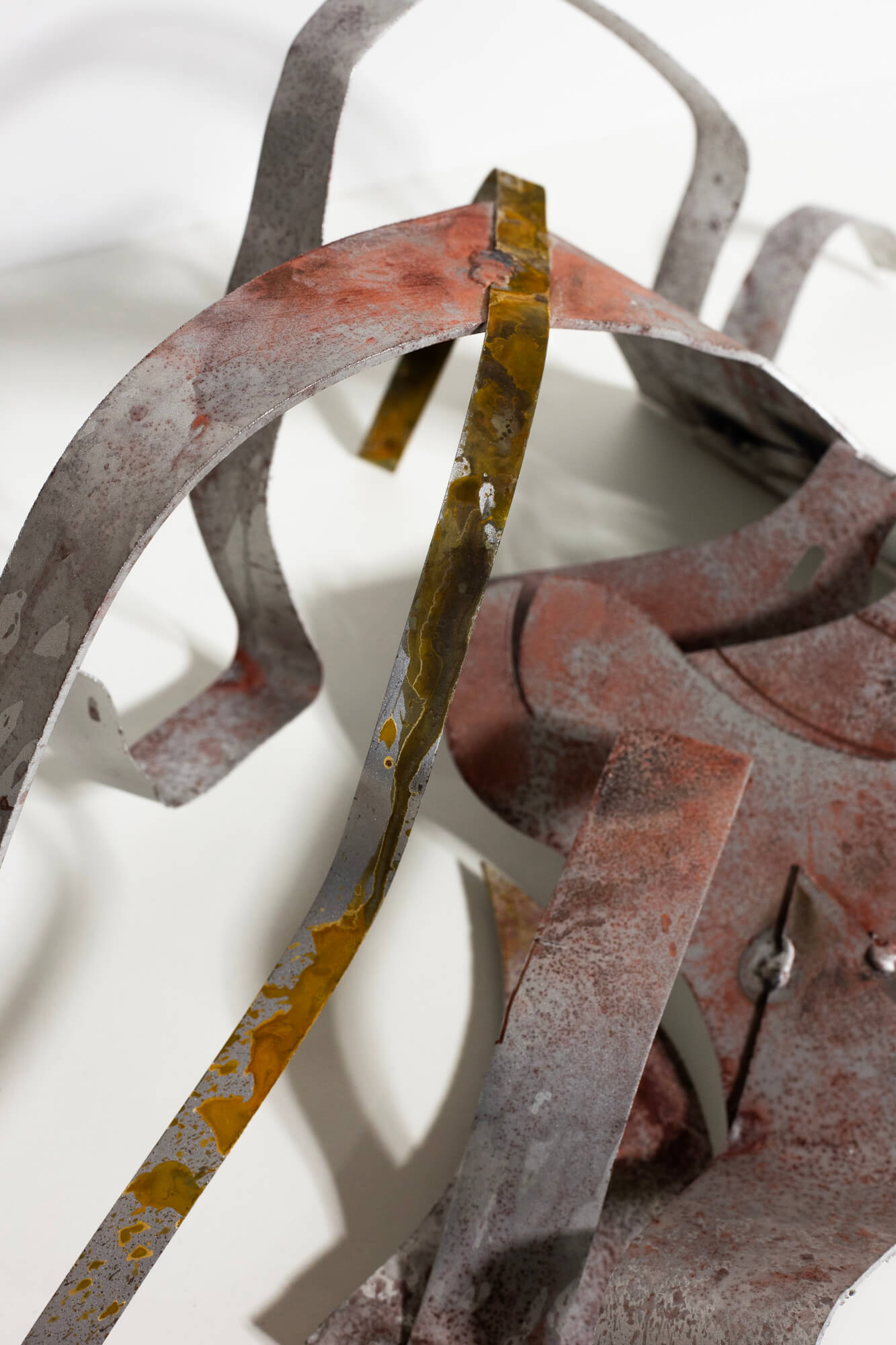
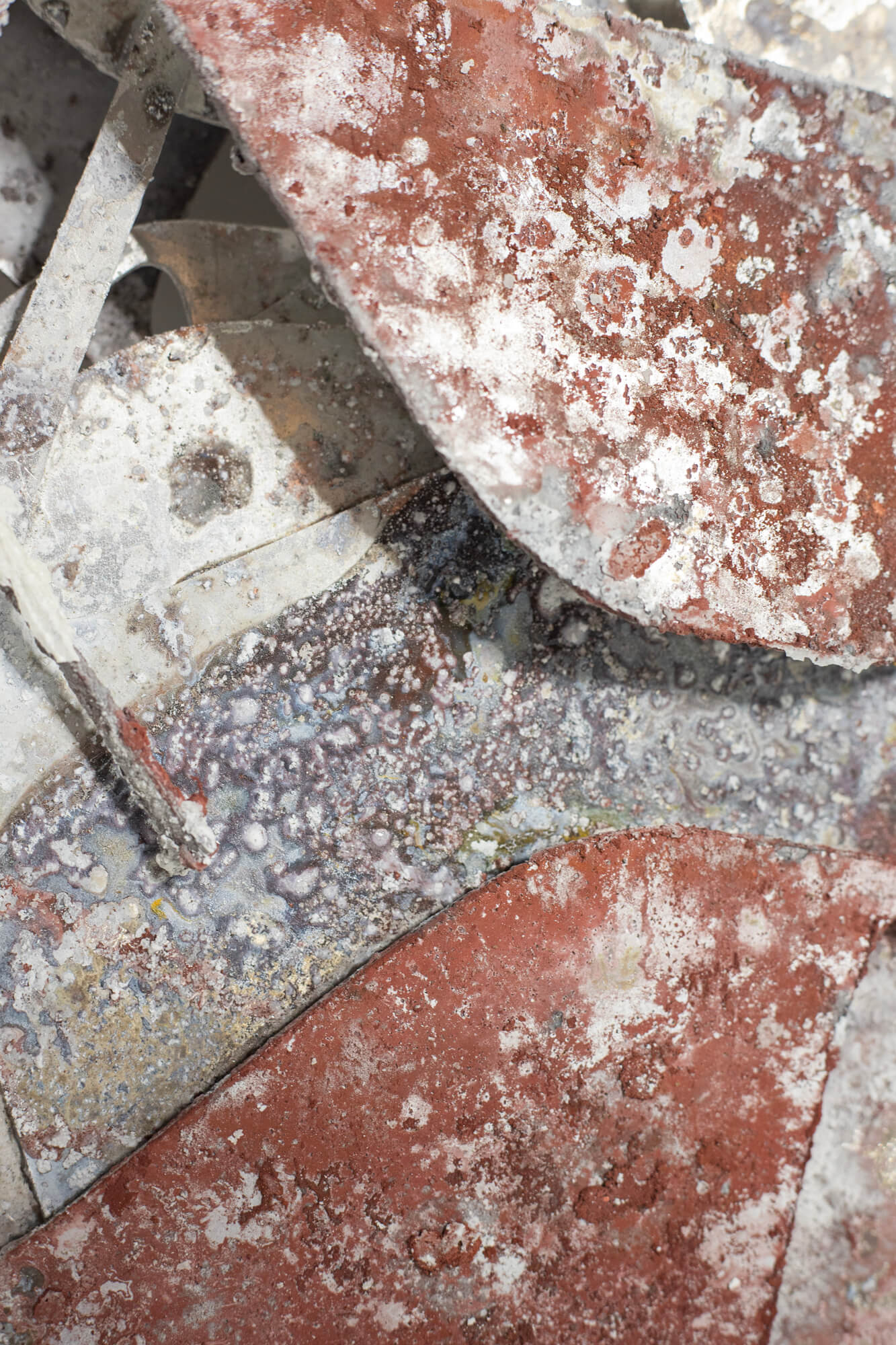
Prototyping Violence. Sculpture Study No. 1. Detail view
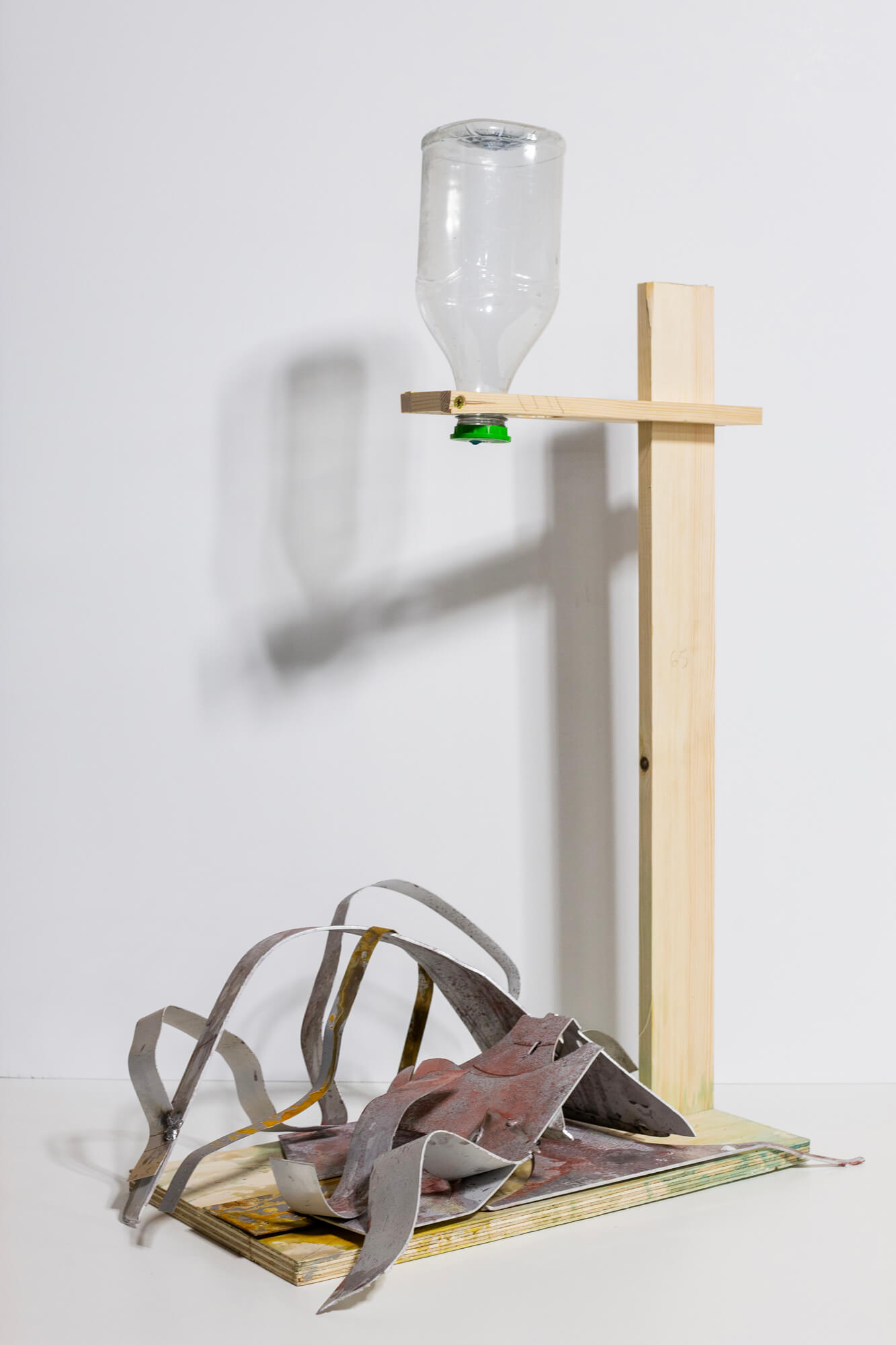
Prototyping Violence. Sculpture Study No. 1. Scrap aluminium, wooden frame, cooper sulfat, plastic bottle. 2025. Experiment view..
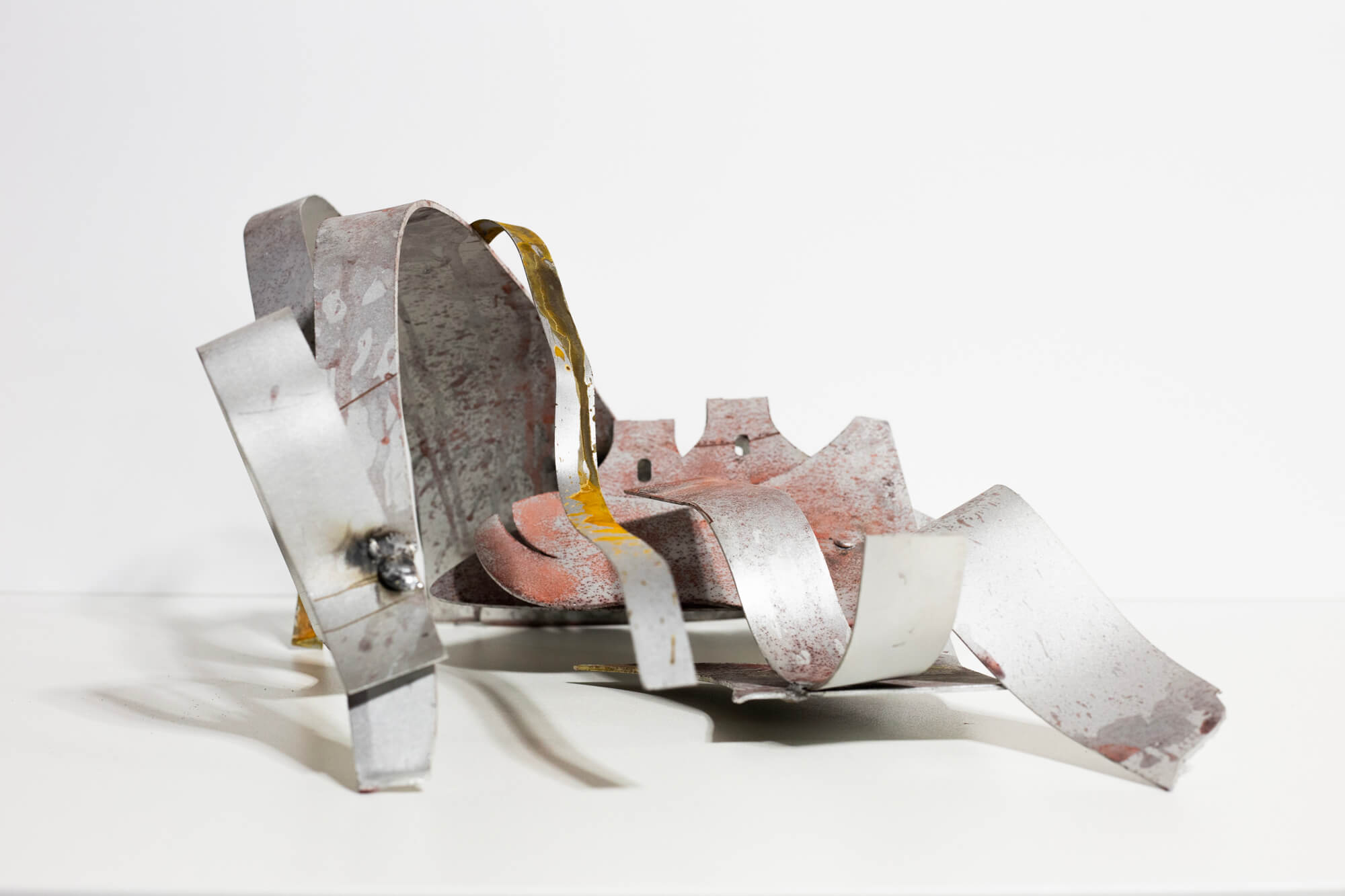
Prototyping Violence. Sculpture Study No. 1. Back view
Prototyping Violence. Sculpture Study No. 3. Corroded Aluminium. 2025
Prototyping Violence. Sculpture Study No. 3. Detail view.
Prototyping Violence. Study of Residue Transfer. Original photo: Horst Faas. 1963. AP Press.
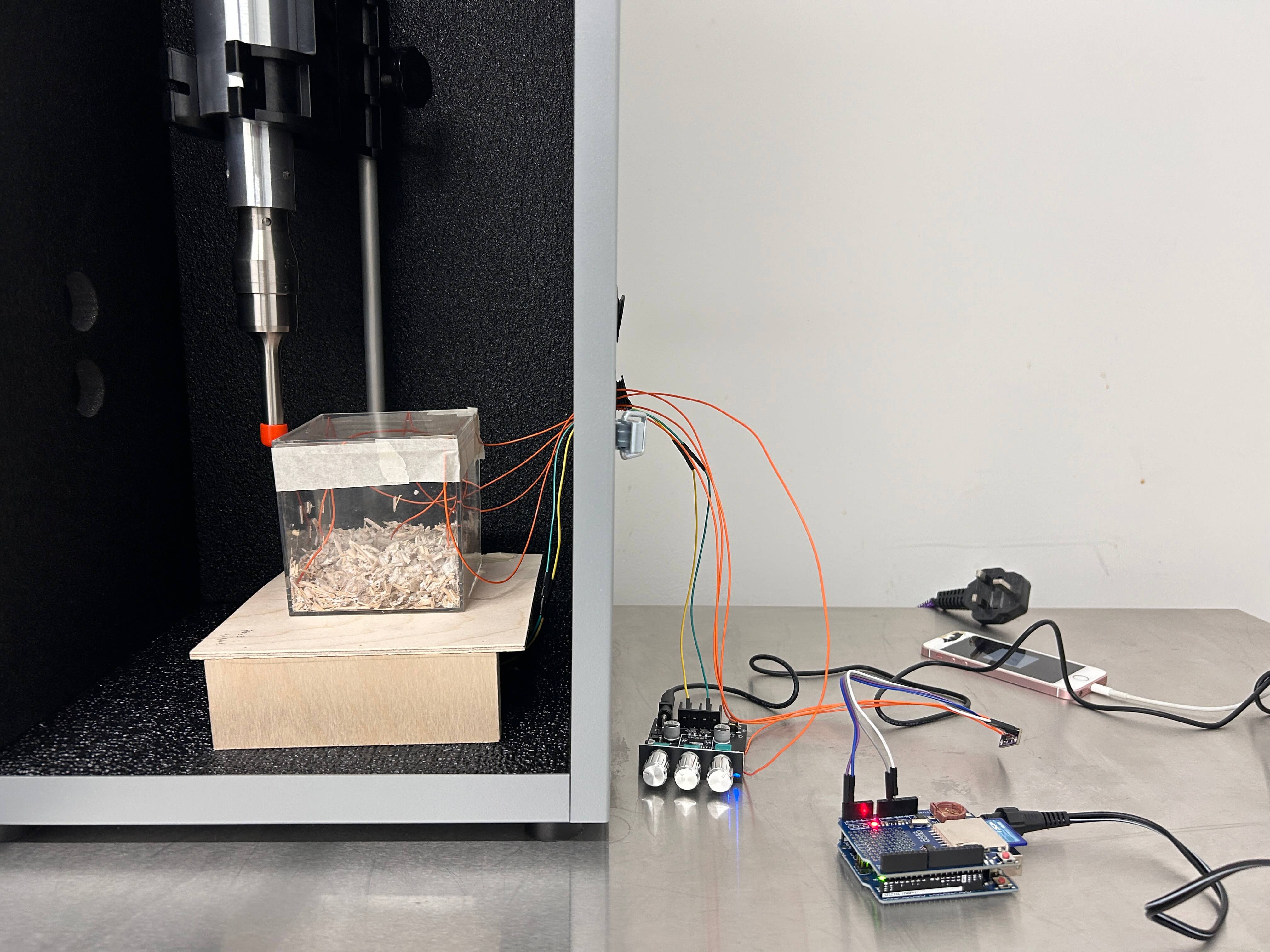
Prototyping Violence. Mycelium Resonance Study. Measurement of mycelium’s electrical signal while being exposed to the vibratified acceleration data of a tree: Mycelim, Arduino, ADS board, wooden board with shaking device mounted underneath, amplifier, iphone. 2025
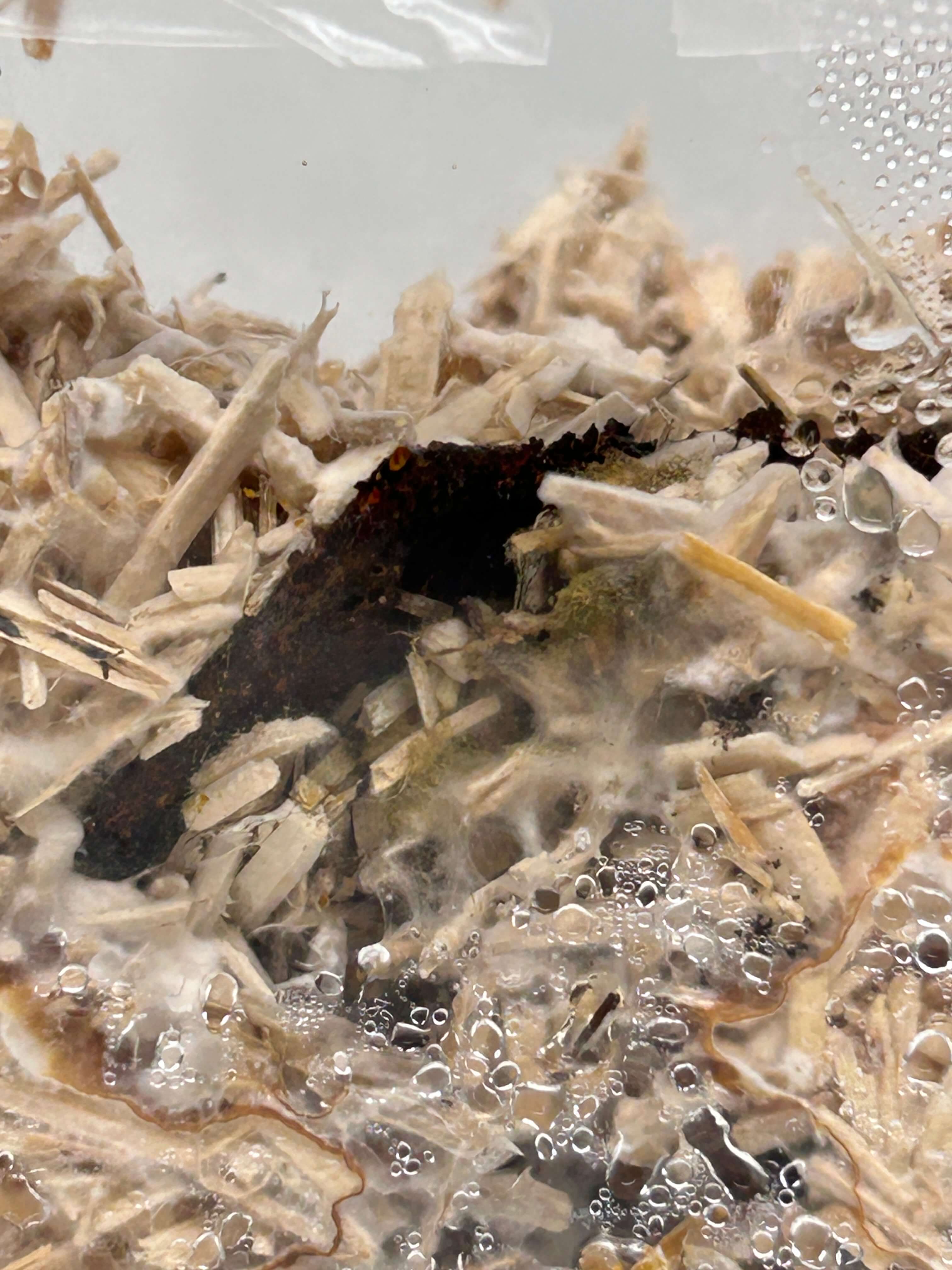
Mycelium Corrosion Study 02: mycelium growth with a corroded aluminum piece. 2025
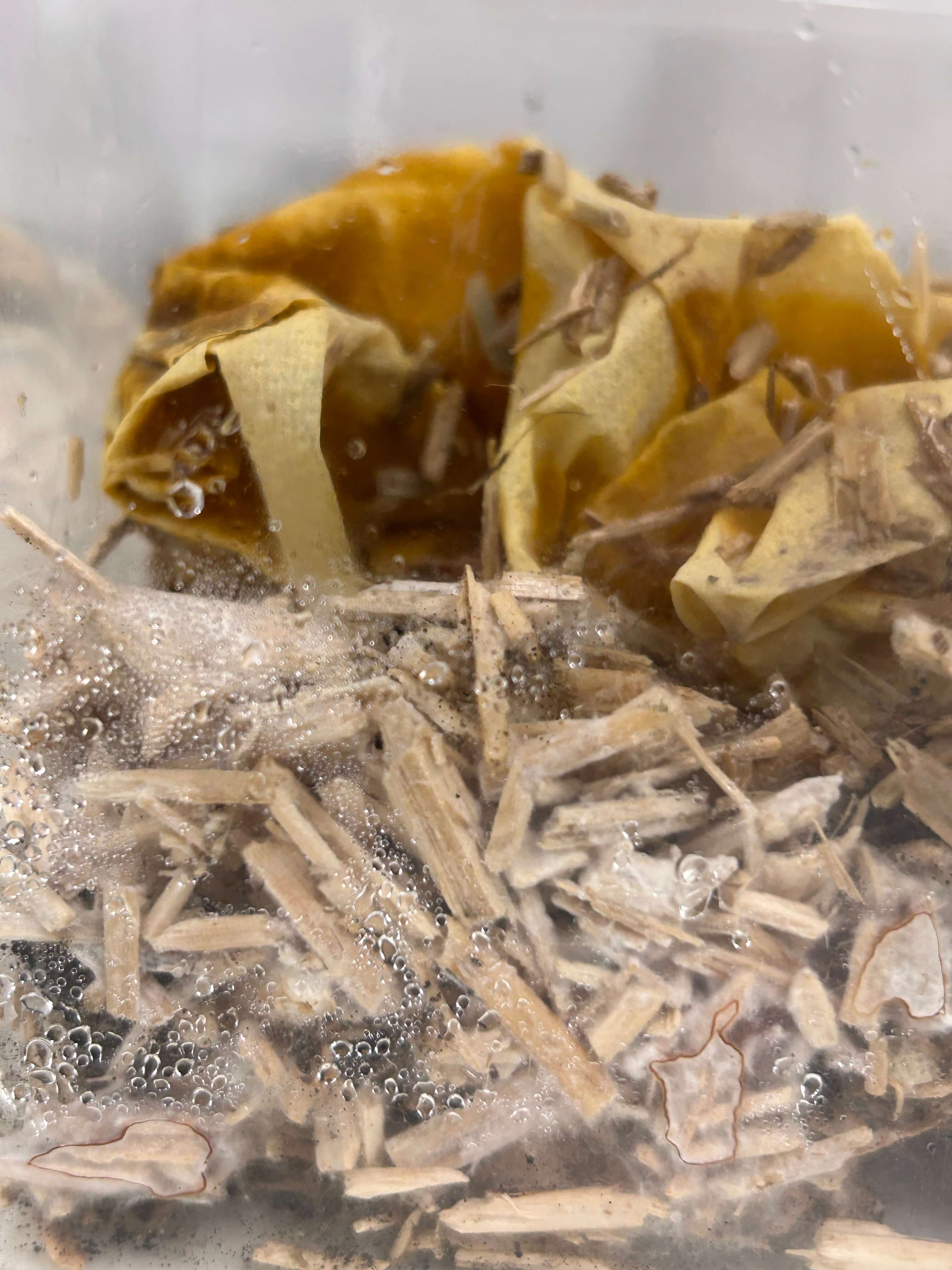
Mycelium Corrosion Study 01: mycelium growth with paper from the residue transfer experiment. 2025
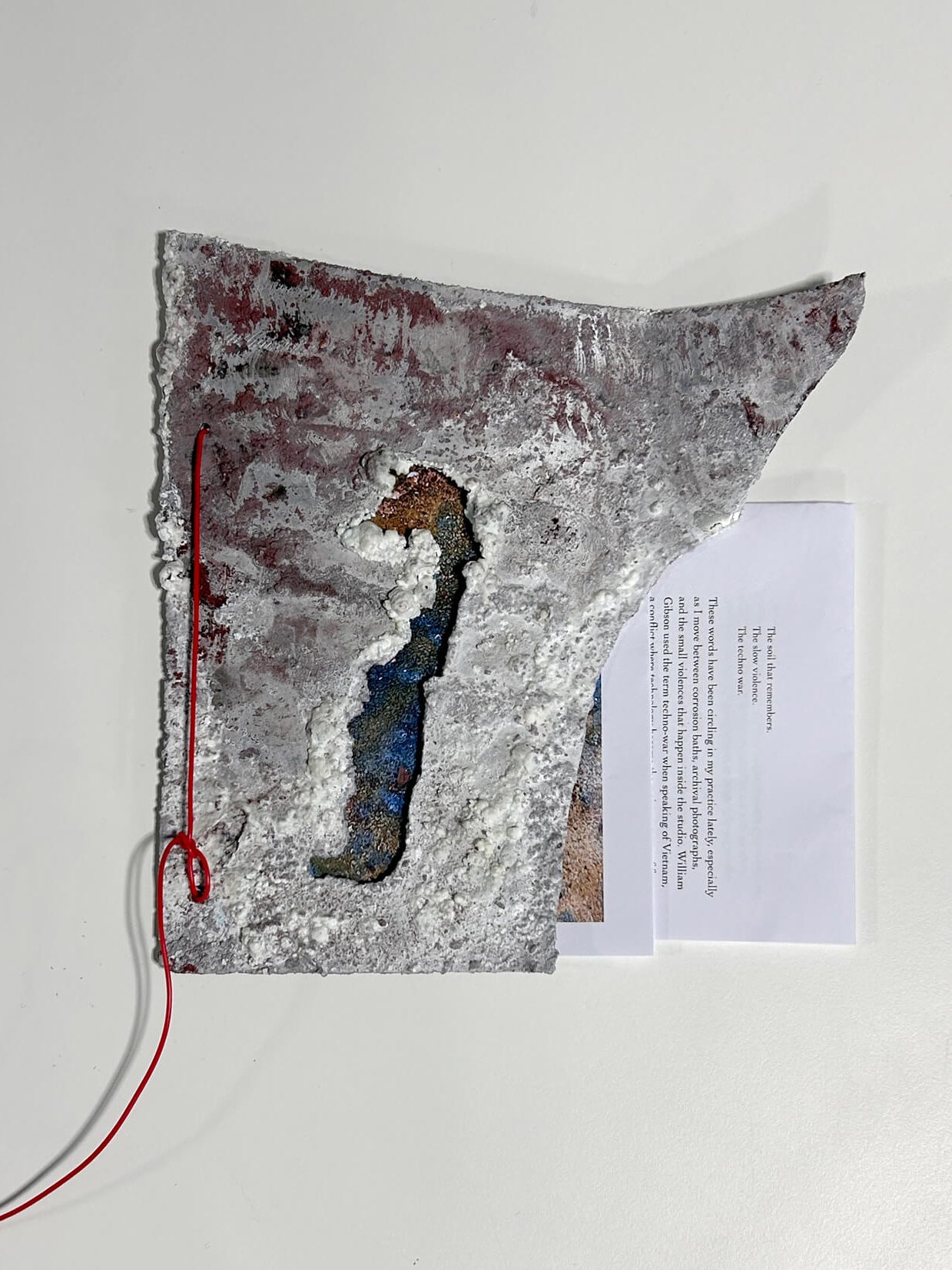
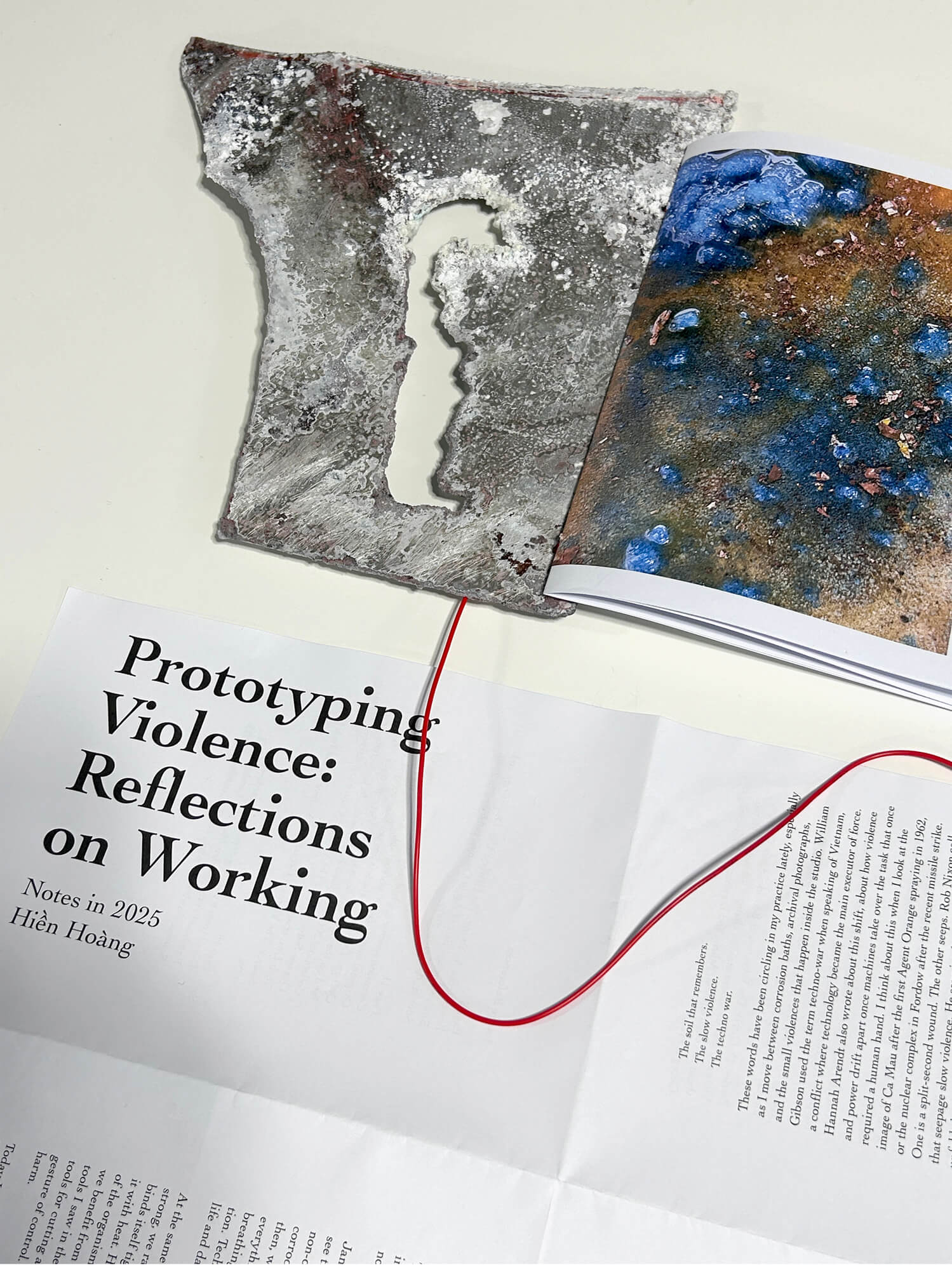
The experiment processes, notes and reflections were documented in a booklet. The cover is made from a corroded aluminum piece.
Prototyping Violence. Booklet with reflection and notes on the working. 2025.
Prototyping Violence. Booklet with reflection and notes on the working. 2025.
Prototyping Violence. Booklet with reflection and notes on the working. 2025.
The performance Lullaby moves between violence and gestures of witnessing and care. It reflects on whether care, when it continues, can shift or interrupt the totality of violence. The work brings together a three-channel video and sound composition, drawing on sonified electrical signals from mycelium, acceleration data from trees, and a humming lullaby. The melody draws from the artist’s memory of her mother’s lullaby.
In conclusion, Prototyping Violence proposes an artistic framework to sense and re-mediate ecological trauma in post-Agent Orange landscapes —an inquiry into how matter corrodes, heals, and remembers.
Arendt, Hannah. (1970). On Violence. New York: Harvest Book.
Bennett, Jane. (2010). Vibrant Matter: a political ecology of things. Duke University Press.
Caruth, Cathy. (1995). Trauma. Explorations in Memory. Baltimore, and London: The Johns Hopkins University Press.
Nixon, Rob. (2011). Slow Violence and the Environmentalism of the poor. Harvard University Press.
Young, Alvin. (2009). The History, Use, Disposition and Environmental Fate of Agent Orange.
Zierler, David. (2011). The Invention of Ecocide. Agent Orange, Vietnam, and the Scientists who changed the way we think about the environment. Athens and London: the Univeresity of Georgia Press.

 Hiền Hoàng