
Garden of Entanglement
(2024 – ongoing)
The eponymous project Garden of Entanglement explores the hidden vibrational life of plants and how they perceive and respond to their environment through sound and motion. Developed in collaboration with academic researchers, Hoàng translates data collected from trees into sculptural forms that encourage a quiet reconsideration of how human presence shapes the natural world.
UV-printed metal plates and mycelium sculptures bear traces of chemical transformation. Copper sulphate and citric acid corrode the metal surfaces in a slow, controlled decay – one that reveals rather than erases. On the fungal body of the sculpture, copper sulphate was again applied, disrupting the organic material with mineral crystallisation and heat.
Exhibition views and Artworks


2025, 240 x 158 x 117 cm.
Sculpture with form extracted from the acceleration and vibrational data of the tree. Material: Mycelium, wood and copper sulfate, motion system mounted underneath

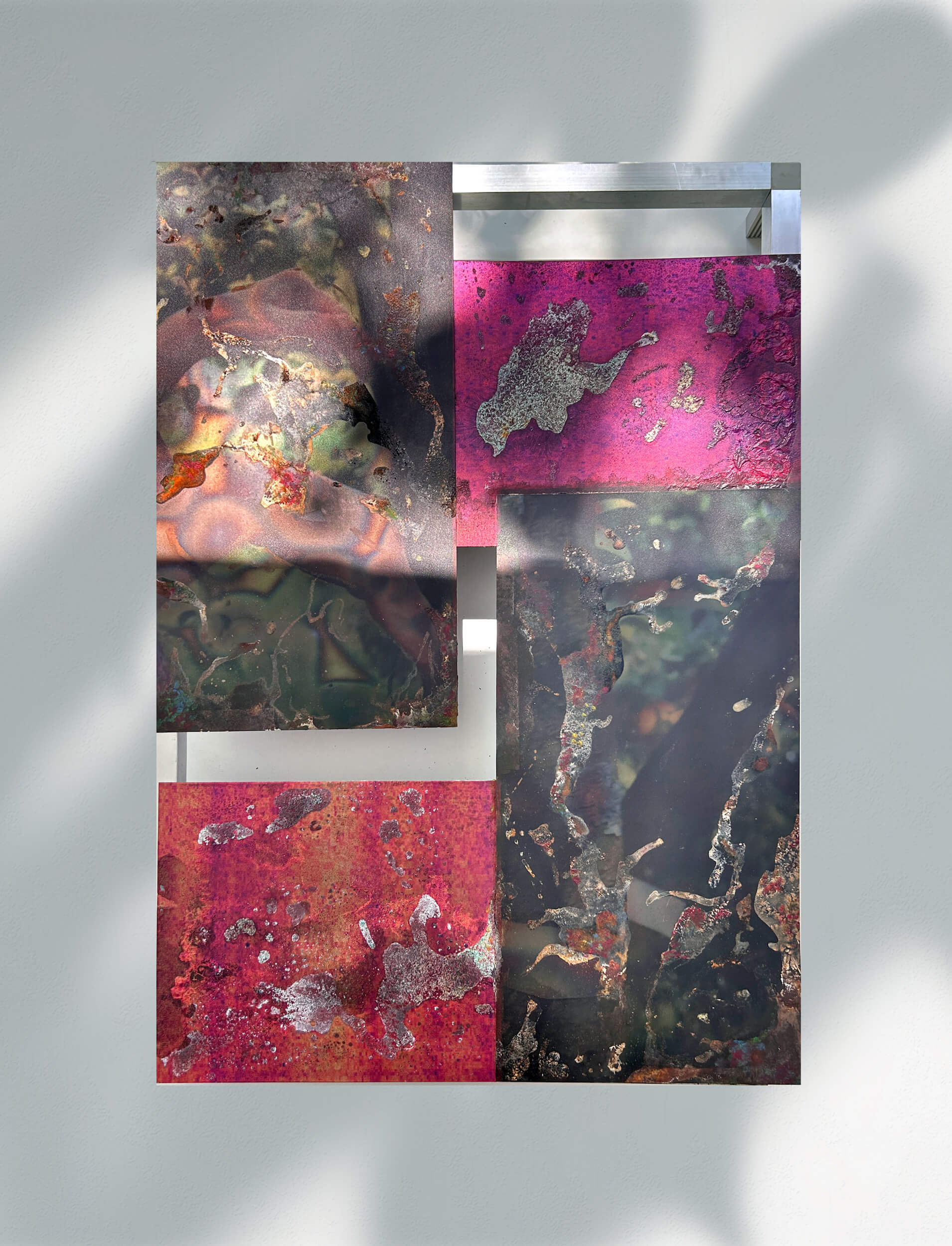
2025, 79 × 54 × 7,5 cm.
Mixed Media. Acryl and UV print of Photography and extracted spectrogram of tree’s resonance, on various types of steel and aluminum, intentionally damaged, oxidized, and heat-treated.

2025, 79 × 54 × 7,5 cm.
Mixed Media. Acryl and UV print of Photography and extracted spectrogram of tree’s resonance, on various types of steel and aluminum, intentionally damaged, oxidized, and heat-treated.

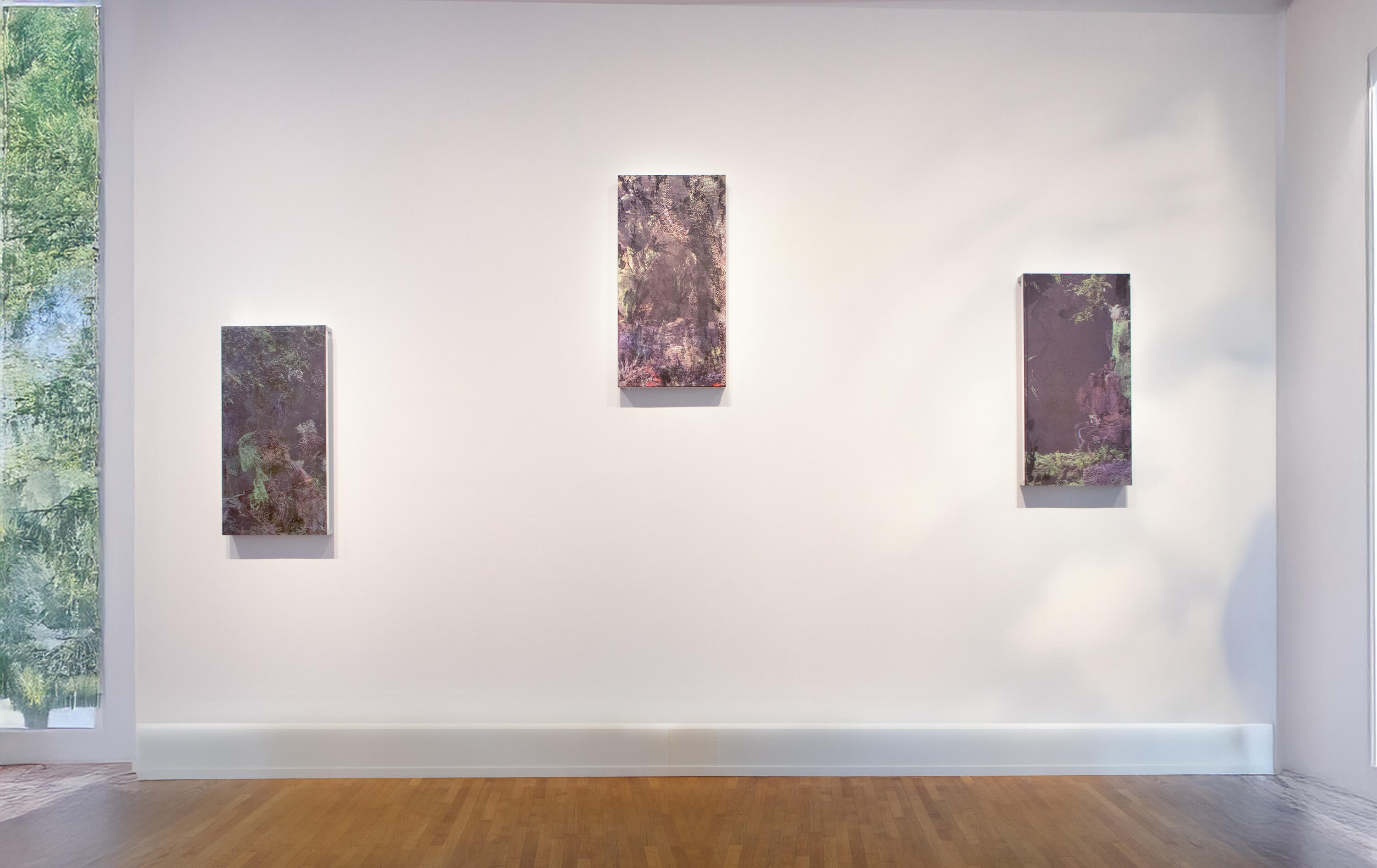
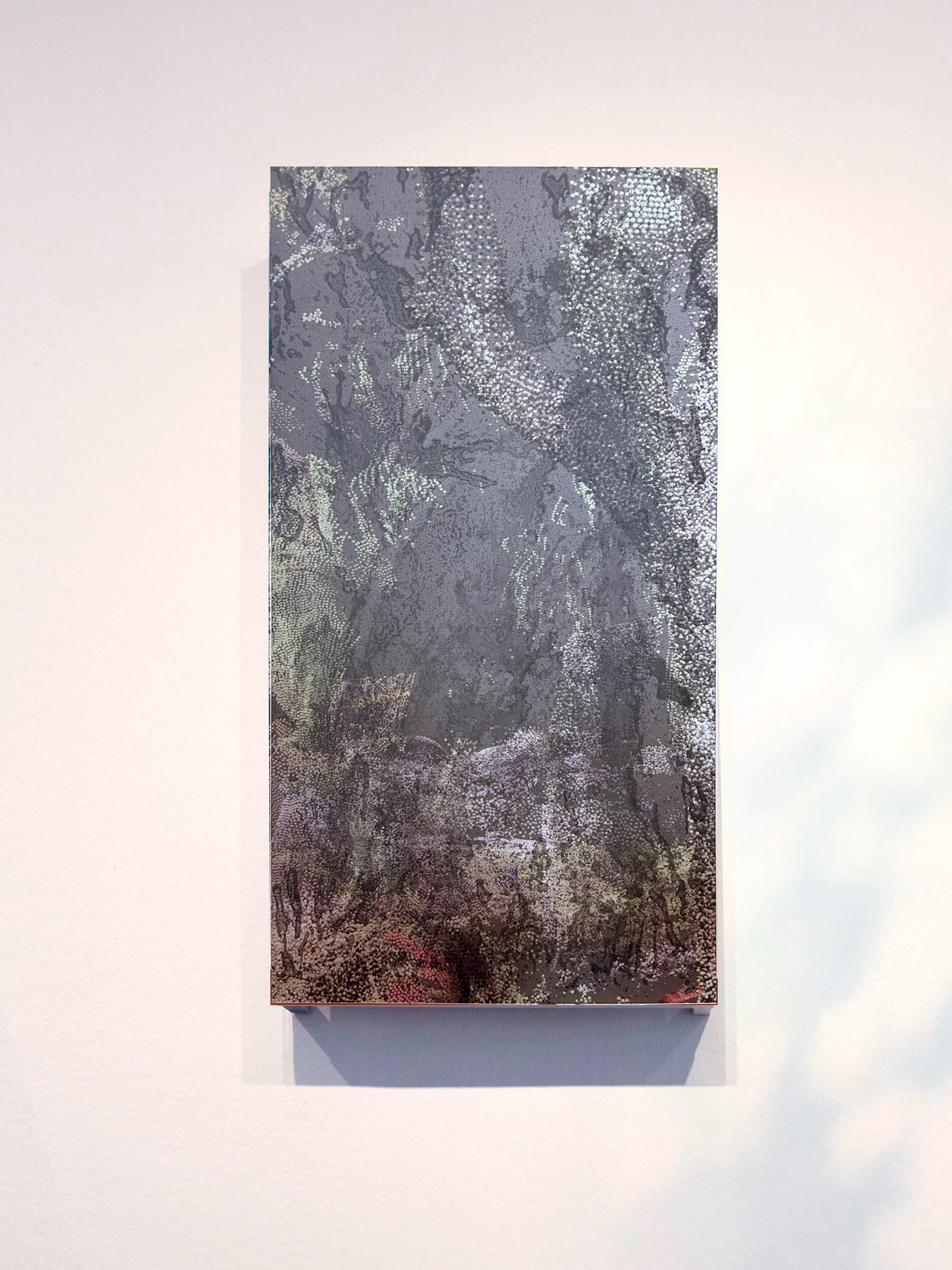
2025, 100 x 50 × 7,5 cm.
UV print of 3D scanned from the research of tree’s resonance, on oxidified and corroded aluminium. Part 2 of the Quadriptych

Through these material processes, the work examines the impact of extraction, environmental violence, and the fragility of memory – even matter like data can rot, absorb, and respond. In this entangled landscape, Hoàng suggests that trees stand as quiet witnesses, holding the residues of our presence: how we lived, what we altered, and what we left behind.
The Research Process
Garden of Entanglement explores the vibrational life of trees and how they sense and respond to their surroundings through motion and sound. At its core is the poetic question: “What would trees remember about us once we are gone?”
Developed in collaboration with scientists from the University of Florence and the Media Solution Center at University of Stuttgart, the project uses accelerometers to capture tree responses to stimuli like touch and sound. This data is then transformed into movement and audio, creating an immersive installation that lets audiences experience tree vibrations in real time.
The project also incorporates an interactive AR game, which allows audiences to step inside the inner world of a tree. The research is funded and supported by S+T+ARTS, European Commission, 2024

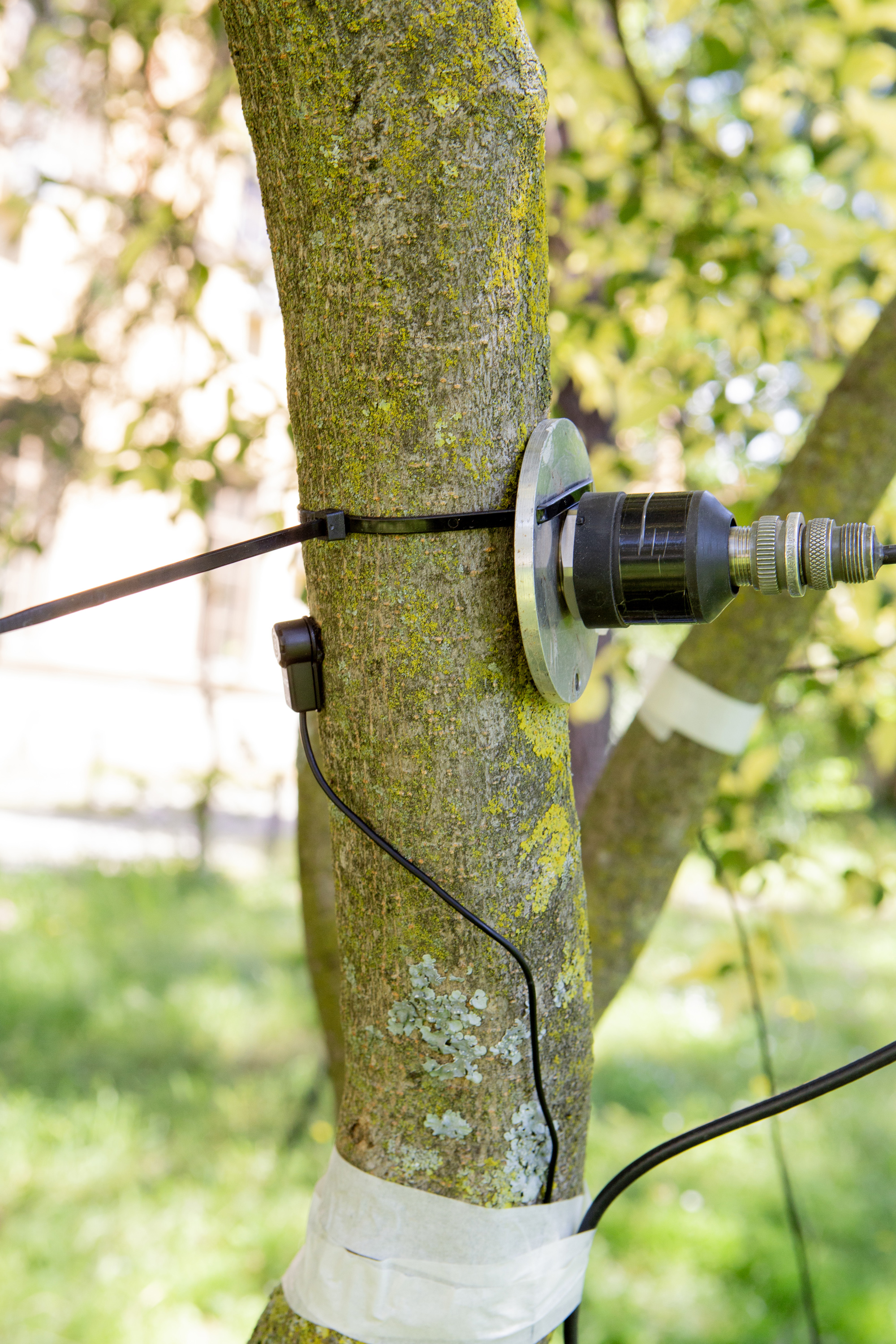
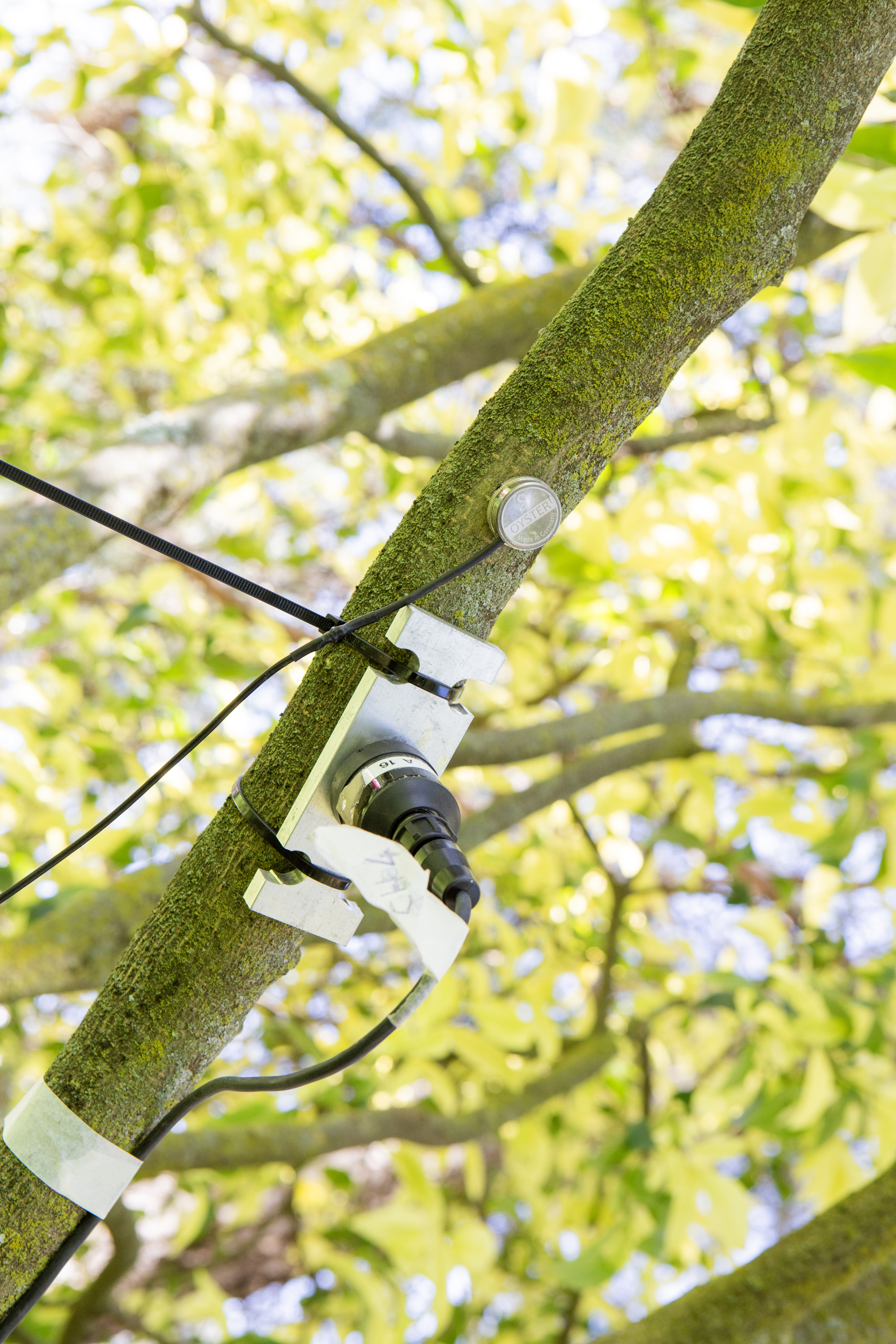


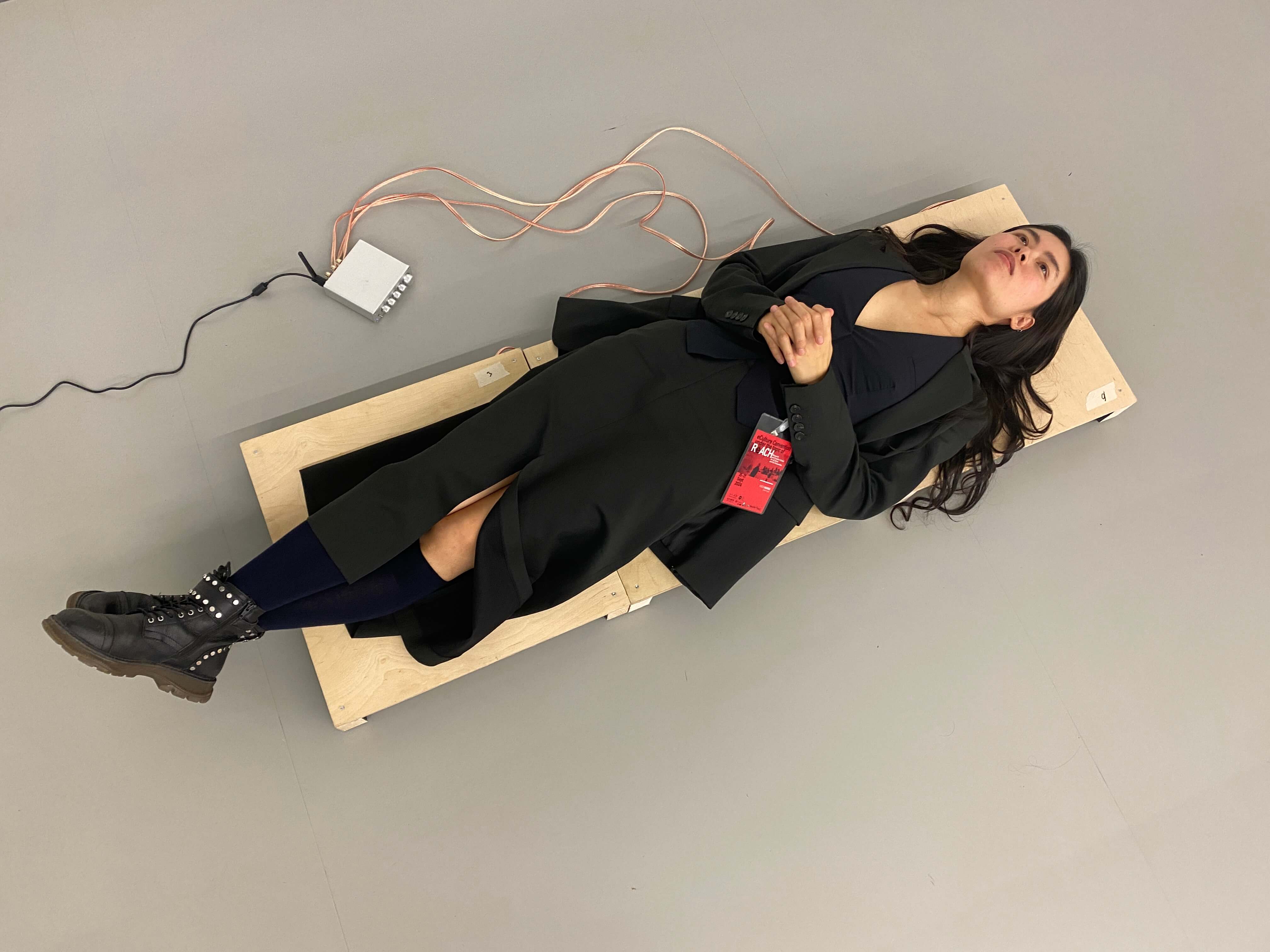
In courtesy of the artist, Hiền Hoàng
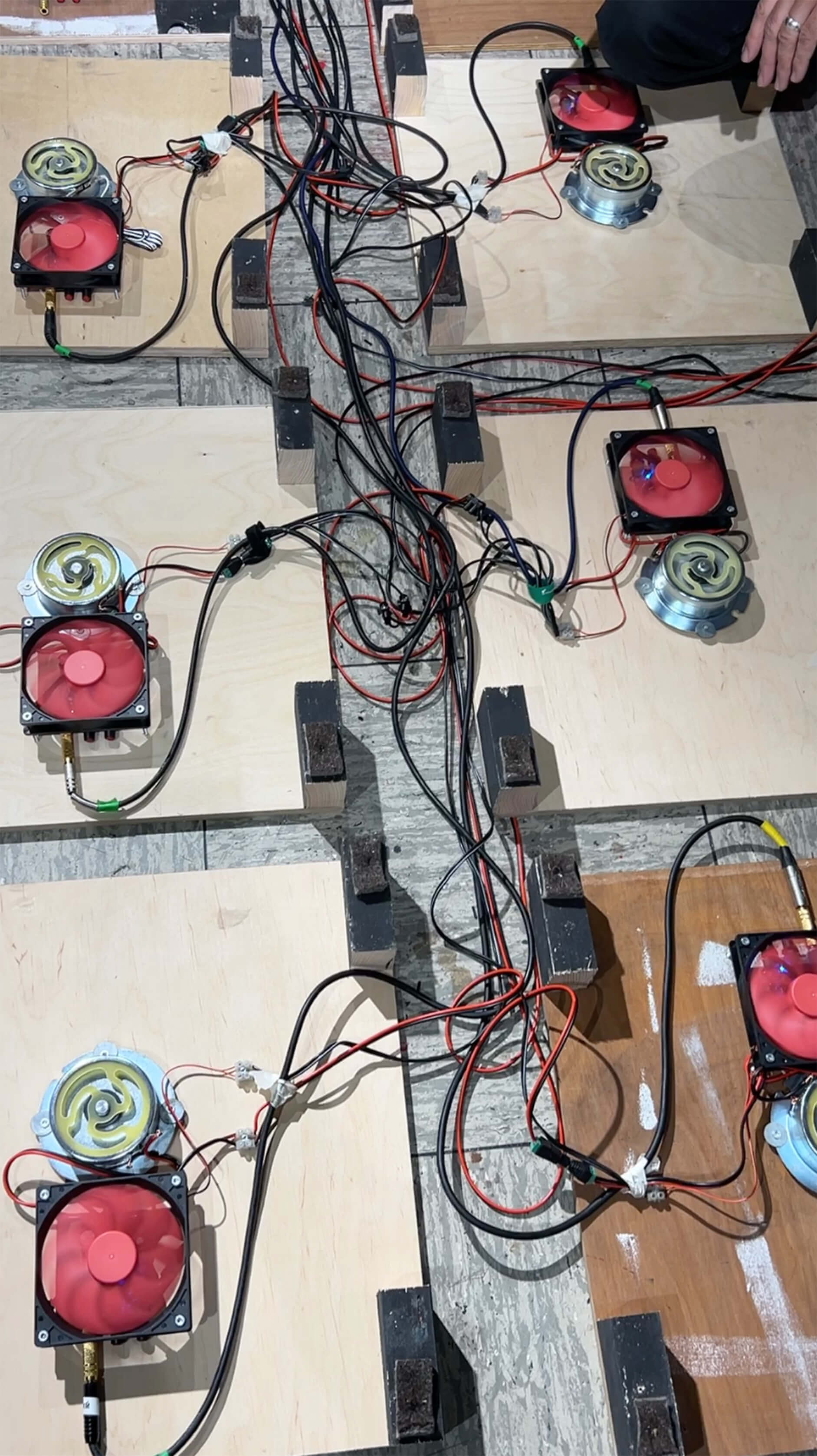

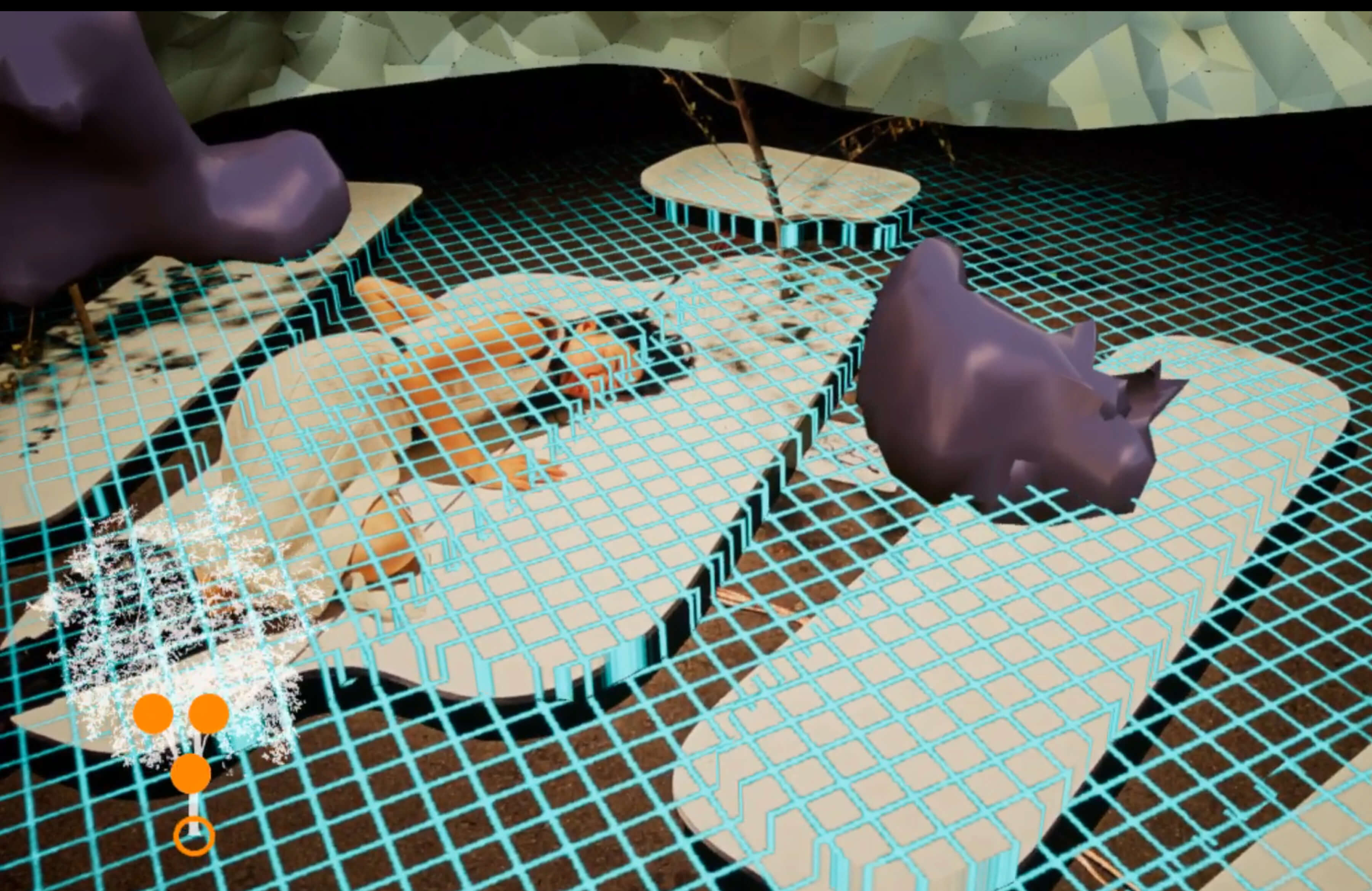

For more information about the AR and the project, please contact the artist.
Team & Partners in this research:
Artistic Team:
Hiền Hoàng – Lead Artist
Daniel Pietschmann – Artist, Designer & Architect
Tam Thi Pham – Multimedia composer
Ulf Groote – 3D artist
Artemiy Vrubel – AR support
Scientific Partners:
Andrea Giachetti – Department of Civil and Environmental Engineering, University Florence, Italy
Susanne Malheiros – HLRS – Media Solution Center, University Stuttgart, Germany
Prof. Philipp Eversmann, Guido Brinkmann, Zoe Kaufmann – Experimental and Digital Design and Construction (EDEK), University of Kassel, Germany
Mauricio Valdes – HEKA sound & science lab, pina center, Slovenia
Other Partners:
In4art (Netherlands), RCR Architeques (Spain), Epica Foundation (Spain)
The project is supported by S+T+ARTS (European Commission), Foam Fotografiemuseum Amsterdam, and Europe Move (Creative Europe)
 Hiền Hoàng